

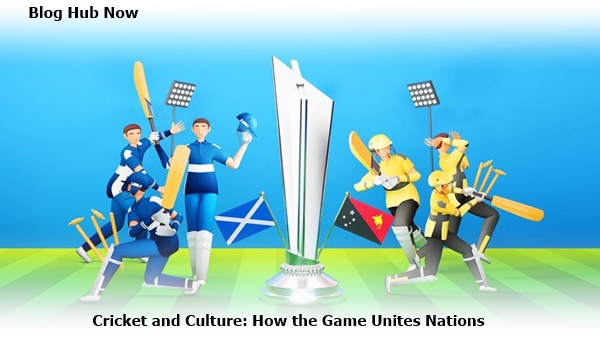
Cricket and Culture: How the Game Unites Nations
Cricket is more than just a sport — it’s a cultural force that connects people across countries, languages, and histories. From crowded streets in Mumbai to serene village greens in England, cricket offers a shared rhythm that resonates far beyond the boundaries of the pitch. It unites fans, bridges divides, and fosters a sense of global belonging.
In this blog, we explore how cricket weaves through cultures and becomes a tool for unity, identity, and diplomacy.
A Global Journey Rooted in History
Cricket began in 16th-century England, but it truly spread through the expansion of the British Empire. As British colonizers traveled to Asia, Africa, the Caribbean, and Oceania, they brought the sport with them. What started as a colonial pastime quickly transformed in each region, adapting to local cultures and gaining deep roots.
In South Asia, cricket became more than entertainment — it turned into a national obsession. India, Pakistan, Sri Lanka, and Bangladesh embraced the game, blending it with regional flair and traditions. In the Caribbean, players adopted cricket as a symbol of pride and resistance during their fight for independence. Meanwhile, countries like Australia, New Zealand, and South Africa used cricket to express growing national identities.
Cricket no longer belonged to England; it belonged to the world.
Cricket as a Cultural Bridge
Few sports spark cross-cultural connection like cricket. International competitions bring together fans from all walks of life. Events like the ICC Cricket World Cup and the T20 World Cup gather billions of viewers, sparking celebration, rivalry, and shared joy.
Historic rivalries — such as India vs. Pakistan or England vs. Australia — carry emotional weight, yet often reveal powerful moments of mutual respect. Even amid political tension, cricket reminds people of their common humanity.
Modern cricket leagues like the Indian Premier League (IPL) and the Caribbean Premier League (CPL) bring players from different nations and cultures onto the same team. These athletes form friendships, exchange traditions, and inspire fans to appreciate diversity. Through cricket, fans discover new music, languages, food, and stories — creating cultural connections that outlast the game.
Shaping National Identity Through Cricket
For many nations, cricket represents more than sport — it reflects who they are.
In India, cricket bridges diverse languages, religions, and regions. A single victory can send celebrations echoing from Kerala to Kashmir. For Pakistan, cricket stars symbolize hope, courage, and national pride. The West Indies team, composed of players from multiple island nations, stands as a powerful symbol of regional unity and shared spirit.
Cricket legends like Sir Donald Bradman, Sachin Tendulkar, Brian Lara, and Imran Khan became icons far beyond their athletic achievements. They embodied their nations’ dreams, struggles, and aspirations.
Cricket Diplomacy: Building Peace Through Play
Cricket has even played a quiet but meaningful role in international diplomacy. Leaders have attended matches to ease political tensions — a practice known as “cricket diplomacy.” The most well-known example is between India and Pakistan, where cricket has often served as a rare channel for dialogue and goodwill.
Even during strained periods, cricket tours and bilateral series help maintain connections between nations. On the pitch, players shake hands, share smiles, and compete with honor — showing the world that respect and unity are always possible
The Future: A Growing Global Game
Cricket is expanding rapidly. With the rise of shorter formats like T20 and tournaments like the T20 World Cup USA 2024, the game is entering new markets in the United States, Europe, and beyond. As women’s cricket gains momentum and grassroots programs grow, cricket is becoming more inclusive and accessible than ever.
The next generation of fans and players will carry forward cricket’s legacy — not just as a sport, but as a unifying force that celebrates our differences while reminding us of our shared love for the game.