

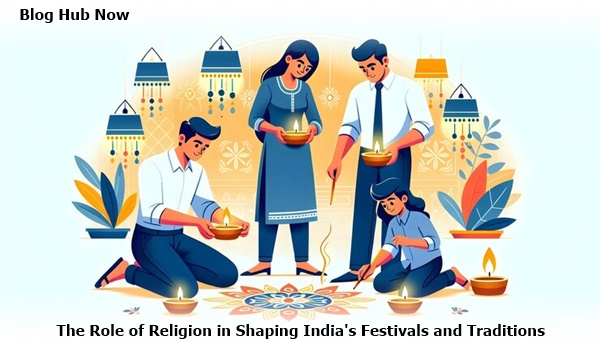
The Role of Religion in Shaping India’s Festivals and Traditions
Introduction: A Country of Colorful Faiths
India is a tapestry woven with threads of ancient religions, vibrant customs, and deep-rooted spirituality. From the snow-covered peaks of Himachal to the sun-soaked shores of Tamil Nadu, one thing unites the country: celebration through tradition. But behind every dance, every ritual, every festive light—lies religion.
In this blog, we explore how religion shapes India’s festivals and traditions, and why this cultural richness continues to thrive in the 21st century.
The Religious Foundations of Indian Culture
India is home to four major world religions—Hinduism, Buddhism, Jainism, and Sikhism—along with large populations of Muslims, Christians, Jews, and others. Each faith brings its own worldview, rituals, calendar, and values that seep into the very fabric of Indian daily life.
Religion doesn’t just influence what people believe—it shapes how they live, celebrate, and even cook.
Major Festivals and Their Religious Roots
Hinduism: Ritual and Rhythm
-
Diwali: The festival of lights, celebrates Lord Rama’s return to Ayodhya.
-
Holi: The festival of colors, rooted in the story of Prahlad and Holika.
-
Navratri & Durga Puja: Honoring Goddess Durga’s victory over evil.
-
Raksha Bandhan: A sacred bond between siblings, tied with ritual and prayer.
Hinduism shapes the majority of India’s festivals, aligning them with lunar calendars and religious epics.
Islam: Unity in Prayer and Generosity
-
Eid-ul-Fitr: Celebrated after Ramadan, emphasizing fasting, prayer, and charity (zakat).
-
Eid-ul-Adha: Symbolizes sacrifice and submission to God’s will.
-
Muharram: Marks the martyrdom of Imam Hussain, observed with processions and reflection.
Islamic festivals promote community bonding, charity, and spiritual reflection.
Christianity: Faith in Service and Light
-
Christmas: Celebrating the birth of Jesus Christ with prayers and gifts.
-
Easter: Observing the resurrection with sunrise services and family feasts.
-
Good Friday: A day of solemn reflection, marked by mass and fasting.
Christian festivals highlight hope, forgiveness, and compassion, blending Indian and Western customs.
Sikhism: Courage, Community, and Devotion
-
Guru Nanak Jayanti: Celebrates the birth of the first Sikh Guru.
-
Baisakhi: Marks the founding of the Khalsa Panth in 1699 and the harvest season.
-
Gurpurabs: Honoring the lives and teachings of Sikh Gurus.
Sikh festivals are often marked by langars (community meals), processions, and kirtans (devotional music).
Buddhism and Jainism: Philosophy and Peace
-
Buddha Purnima: Celebrating Buddha’s birth, enlightenment, and nirvana.
-
Mahavir Jayanti: Honoring Lord Mahavira’s life and principles of non-violence and truth.
-
Paryushana: A Jain spiritual retreat focused on self-purification.
These faiths emphasize mindfulness, minimalism, and inner peace.
Traditions Beyond Festivals
Religion also shapes:
-
Marriage rituals (Hindu pheras, Nikah, Christian vows)
-
Funeral rites (cremation, burial, or Jain santhara)
-
Food customs (vegetarianism, halal, fasting)
-
Dress codes (sarees, turbans, skull caps)
-
Daily rituals (pujas, namaaz, lighting diyas)
Each is a reflection of centuries-old religious practices passed down with reverence.