

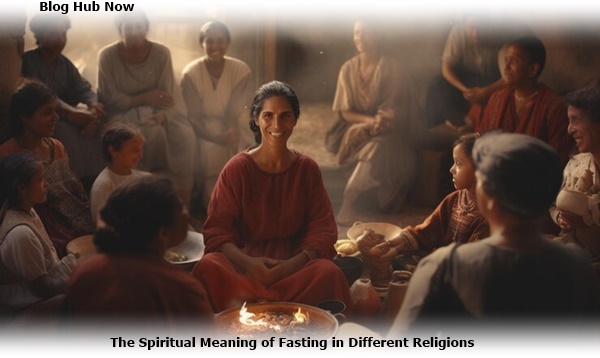
The Spiritual Meaning of Fasting in Different Religions
In nearly every major religion around the world, fasting holds a sacred place. More than just abstaining from food or drink, fasting is a deeply spiritual practice — one that connects the body, mind, and soul.
Across cultures and traditions, fasting is used to reflect, cleanse, discipline, and draw closer to the divine. While the methods and meanings may vary, the core purpose remains universal: spiritual growth through self-denial.
In this blog, we explore the spiritual significance of fasting in different religions, and what it teaches us about the human quest for connection, meaning, and inner peace.
Islam: Submission and Self-Discipline (Ramadan)
In Islam, fasting is most notably observed during the holy month of Ramadan, one of the Five Pillars of the faith. From dawn until sunset, Muslims refrain from food, drink, smoking, and sexual activity.
Spiritual meaning:
-
Submission to God (Allah)
-
Empathy for the poor and hungry
-
Purification of the heart and body
-
Detachment from worldly desires
Ramadan is not only about physical fasting — it’s also a time for spiritual reflection, prayer, charity, and community.
Judaism: Atonement and Repentance (Yom Kippur)
Fasting is a vital part of Judaism, especially during Yom Kippur, the Day of Atonement — the holiest day of the Jewish calendar. Jews fast for 25 hours, abstaining from food, drink, and other physical comforts.
Spiritual meaning:
-
Repentance for sins
-
Renewal of one’s relationship with God
-
Reflection and prayer
-
Cleansing of the soul
Other Jewish fasts include Tisha B’Av, a day of mourning, and smaller fasts for historical events.
Christianity: Sacrifice and Devotion (Lent)
In Christianity, fasting is practiced especially during Lent, the 40 days leading up to Easter, commemorating Jesus Christ’s fasting in the wilderness. While practices vary by denomination, many Christians give up food, luxuries, or bad habits.
Spiritual meaning:
-
Imitating the sacrifice of Christ
-
Repentance and self-examination
-
Strengthening faith and reliance on God
-
Preparation for resurrection and renewal
Some Christians also observe fasting on Ash Wednesday, Good Friday, and other holy days.
Hinduism: Purification and Devotion
Fasting in Hinduism, known as “Upavasa”, is a common spiritual discipline. It is often practiced on holy days, lunar phases, or in honor of specific deities like Shiva, Vishnu, or Durga.
Spiritual meaning:
-
Purifying the body and mind
-
Enhancing concentration during prayer or meditation
-
Detachment from physical cravings
-
Expressing devotion and self-control
Types of fasts range from full-day water-only fasts to partial fasts that exclude specific foods.
Buddhism: Mindfulness and Detachment
In Buddhism, fasting is not emphasized as a moral obligation but as a tool for discipline, mindfulness, and inner clarity. Many Buddhist monks and nuns practice intermittent fasting — such as refraining from eating after noon — as part of their daily routine.
Spiritual meaning:
-
Letting go of attachment to the senses
-
Training the mind to overcome desires
-
Promoting self-discipline and simplicity
-
Deepening meditation and awareness
For lay Buddhists, fasting is often done on Uposatha days, aligning with phases of the moon.
Jainism: Austerity and Liberation
Jainism places a strong emphasis on fasting as a path to spiritual liberation (moksha). Jains may engage in extreme fasting, especially during festivals like Paryushana or at the end of life (Santhara or Sallekhana).
Spiritual meaning:
-
Purification of karma
-
Austerity and non-attachment
-
Self-restraint and penance
-
Preparation for the soul’s release
Fasting in Jainism is often rigorous, involving complete abstention from food and sometimes even water, guided by deep spiritual intention.
Indigenous and Tribal Traditions: Vision and Connection
In many Indigenous and tribal cultures, fasting is used in vision quests or spiritual rites of passage. It is a way to enter a heightened state of awareness and connect with the spirit world.
Spiritual meaning:
-
Seeking guidance from ancestors or spirits
-
Marking transformation or personal growth
-
Communion with nature and the divine
-
Reverence for life and sacred knowledge
These fasts are deeply ceremonial and are often accompanied by isolation, prayer, and ritual.
A Universal Act of the Soul
Despite their differences, fasting across religions shares common themes:
-
Self-discipline over the body and desires
-
Reflection and spiritual awareness
-
Connection with a higher power or divine force
-
Empathy for others and the suffering of the world
-
Transformation through temporary discomfort
Fasting is ultimately about choosing the spiritual over the physical, and in doing so, rediscovering a deeper sense of purpose, compassion, and clarity.