

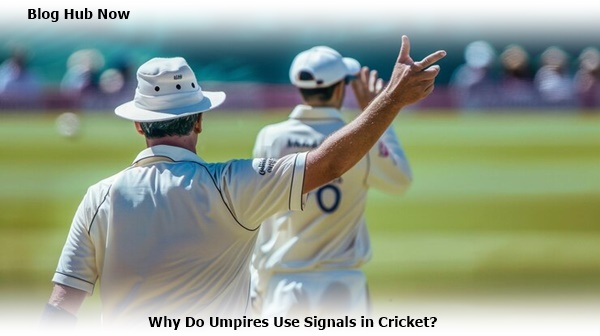
Why Do Umpires Use Signals in Cricket?
Understanding the Language of the Game
If you’ve ever watched a cricket match, you’ve likely noticed the umpires making distinct hand gestures after nearly every ball. From outstretched arms to raised fingers and tapping wrists, these signals might look mysterious to casual viewers — but each one serves a specific purpose.
In this blog, we’ll explore why umpires use signals in cricket, what they mean, and how they help keep the game organized and fair.
Why Are Signals Important in Cricket?
Cricket is a fast-paced and complex game involving multiple officials, players, and sometimes, thousands of spectators. Umpire signals serve several vital functions:
Clear Communication
Signals provide a universal method of communication between umpires, players, scorers, broadcasters, and fans. This helps avoid misunderstandings on the field.
Consistency and Transparency
Using standardized hand signals ensures that everyone — regardless of language or location — understands the decisions being made.
Record Keeping
Scorers rely on umpire signals to accurately record each ball’s outcome. These signals ensure that match data is precise and complete.
Who Uses These Signals?
Mainly, the on-field umpires use signals during a match. However:
-
Third umpires may use hand gestures when communicating decisions (e.g., confirming a dismissal after video review).
-
TV umpires use visual cues for broadcasters.
-
Occasionally, players signal for a review, but only umpires give official signa
How Players and Fans Benefit
For Players:
-
Clarity on game decisions (e.g., when a no-ball is called)
-
Immediate awareness of reviews or dismissals
-
Less confusion during close calls
For Fans:
-
Understand what’s happening in real-time
-
Enhanced viewing experience — especially on TV
-
More engagement through recognizable gestures
A Universal Language
One of the great things about cricket umpiring signals is their universality. Whether the match is in India, Australia, England, or South Africa, the signals remain the same. This standardization ensures that fans across the globe understand and enjoy the game.
Fun Fact: Umpire Signals on TV
TV broadcasters often highlight umpire signals using slow-motion replays, graphics, or animations. This not only adds drama but also helps new fans learn the game.
For example, when an umpire signals “out” with a raised finger, commentators might replay the delivery with Hawk-Eye graphics or Snickometer technology.
Technology and Umpiring
With the rise of Decision Review Systems (DRS) and UltraEdge, umpires now blend traditional hand signals with high-tech tools. Still, their hand signals remain a crucial part of the decision-making process.