

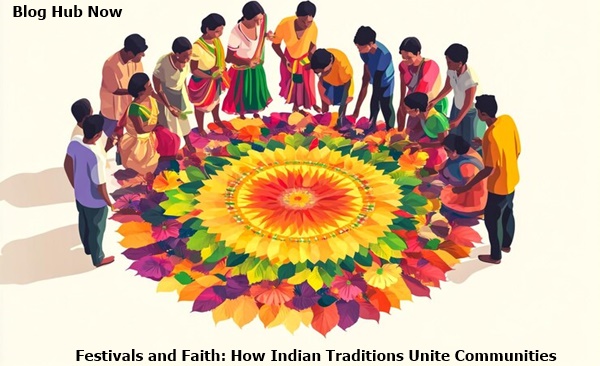
Festivals and Faith: How Indian Traditions Unite Communities
India is a land of vibrant colors, deep-rooted faiths, and grand celebrations. With a population that follows diverse religions—Hinduism, Islam, Christianity, Sikhism, Buddhism, Jainism, and more—festivals in India are more than religious rituals. They are powerful expressions of unity, togetherness, and cultural pride.
Despite its incredible diversity, India’s festivals act as social glue, forging unity across communities, generations, and regions. In this blog, we explore how faith-based celebrations are not just about worship. Rather, they are about building connections and fostering harmony in the world’s most spiritual democracy.
The Cultural Power of Indian Festivals
India’s festivals are celebrated with unmatched enthusiasm—from the bustling streets of Delhi to the serene villages of Kerala.
What makes Indian festivals unique?
-
They are deeply rooted in mythology and history.
-
Moreover, they are celebrated across all religions and regions.
-
Importantly, they are marked by community participation—not just private prayer.
-
In addition, they involve food, music, dance, decorations, and rituals.
Whether it’s Diwali’s lights, Eid’s feasts, or Christmas carols, these festivals reflect a vibrant blend of faith, family, and fellowship.
Festivals Across Faiths—One Country, Many Celebrations
India’s religious and cultural mosaic ensures that every faith contributes to the national calendar of joy.
Hindu Festivals:
-
Diwali (Festival of Lights): Celebrated across castes and regions.
-
Holi (Festival of Colors): Known for its joyful spirit and emphasis on social equality.
-
Navratri/Durga Puja: Community events filled with dance, worship, and celebration.
Muslim Festivals:
-
Eid-ul-Fitr & Eid-ul-Adha: Celebrated with prayers and meals shared with neighbors.
-
Muharram: A solemn time of remembrance and solidarity.
Christian Festivals:
-
Christmas: Involves decorated churches, carols, and inclusive gatherings.
-
Easter & Good Friday: Observed with deep reverence and spiritual reflection.
Sikh, Buddhist, and Jain Festivals:
-
Gurpurab (Sikh): Marked by processions and community meals (langar).
-
Buddha Purnima (Buddhist): Features peaceful meditations and group prayers.
-
Mahavir Jayanti (Jain): Focuses on values like non-violence and compassion.
Clearly, while customs differ, the spirit of unity remains constant.
How Festivals Unite Communities
In India, festivals frequently transcend religious lines. People of different faiths participate in each other’s celebrations out of mutual respect and joy.
How do festivals create unity?
-
Firstly, community feasts like langars welcome all, regardless of background.
-
Secondly, public celebrations such as Ganesh Chaturthi and Durga Puja are often organized by interfaith neighborhood groups.
-
Furthermore, schools and workplaces celebrate multiple religious holidays, fostering inclusion and awareness.
-
Lastly, charity work during festivals promotes compassion, empathy, and service.
Ultimately, Indian festivals don’t divide—they unite.
Modern Celebrations: Tradition Meets Inclusion
Today’s festivals are adapting to modern lifestyles while retaining their core values.
Notable emerging trends include:
-
Eco-friendly practices, such as clay idols and organic colors
-
Online prayers and virtual darshans for remote access
-
Interfaith celebrations in urban housing societies and colleges
-
Inclusive branding in advertisements that represent India’s diversity
As a result, modern celebrations reflect a move from rigid rituals to inclusive, value-driven spirituality.
Role of Festivals in Rural and Urban India
Festivals serve as cultural anchors—both in the countryside and in urban centers.
In rural India:
-
Festivals often align with the agricultural calendar.
-
They provide much-needed breaks and foster village-wide involvement.
-
In addition, local fairs (melas) support artisans, performers, and small traders.
In urban India:
-
Festivals help people reconnect with cultural roots.
-
Shared celebrations in apartments and offices build community spirit.
-
Moreover, festivals present opportunities for volunteering and social outreach.
Regardless of geography, festivals consistently bring people together.
Children and Youth: Carriers of Tradition
The youth play a vital role in preserving and evolving India’s festive heritage.
-
Schools promote understanding through festive plays, arts, and music.
-
Teenagers and college students often lead organization of cultural events.
-
Additionally, platforms like Instagram and YouTube allow youth to reinterpret traditions for modern audiences.
In essence, children and young adults carry forward values of unity, respect, and cultural pride.
When Faith Meets Humanity: Social Impact of Festivals
Indian festivals are not only spiritual—they are also platforms for collective goodwill and service.
Examples of social impact:
-
Diwali and Eid donation drives for underserved communities
-
Christmas concerts and food banks for the needy
-
Gurpurab langars serving thousands across faiths
-
Ganpati visarjan clean-up campaigns led by citizen volunteers
Therefore, Indian festivals go beyond worship—they become catalysts for kindness and civic responsibility.